


Start with the fixed parts of the day
Write down ceremony time, venue access, reception entrance and dinner service before placing portrait sessions. Include hair and makeup finishing times, dressing time and any cultural or religious traditions that affect the schedule.
Then identify what can move. A short portrait break during the reception may be possible, but it needs to work with your meal, speeches and the venue team. Agree on that opportunity ahead of time.
Separate the three portrait sessions
Family photographs
Prepare a focused list of groupings with names, not just “family photos.” Include any mobility needs or sensitive family dynamics your photographer should know about privately. Ask someone who knows the guests to help gather each group.
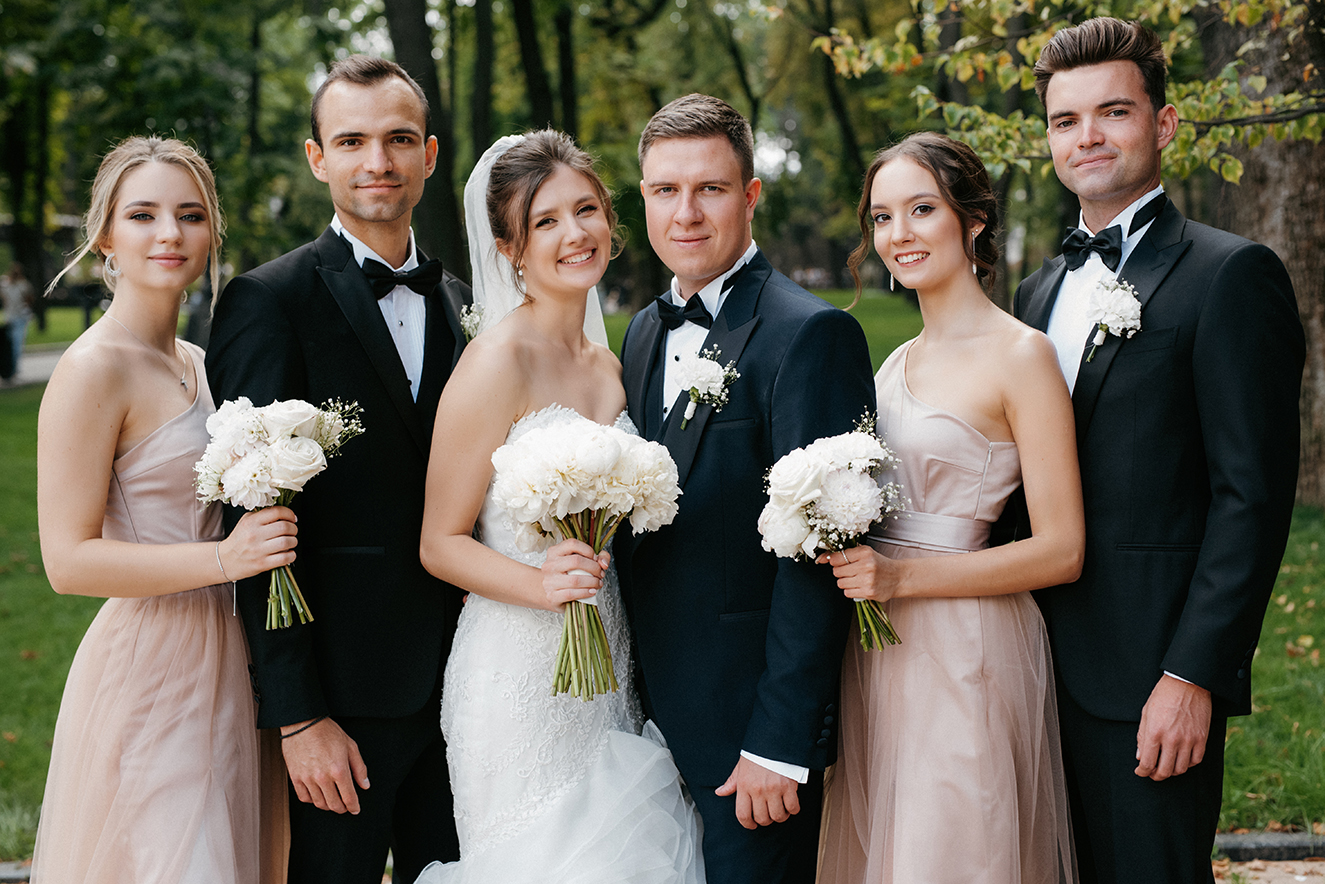
Wedding-party photographs
Confirm where the group needs to be and what happens immediately afterward. Keeping everyone together until these photographs are finished avoids trying to find people once they have moved on to the reception.
Portraits together
Leave a little uninterrupted time for the two of you. Discuss the locations and mood you like, whether that means a quiet indoor setting, an outdoor walk or a short session near your reception.
Decide whether a first look fits you
A first look can move some portraits before the ceremony. It may give you more time with guests afterward, but it also requires both partners to be ready earlier.
Waiting until the ceremony to see each other is equally valid. In that case, reserve a realistic portrait window afterward and discuss how it overlaps with cocktail hour. Choose the experience you want, then build the schedule around it.
Plan for your actual locations and light
Use the addresses of your preparation spaces, ceremony, portrait locations and reception. For every move, account for getting out of one location and into the next, as well as the drive.
If sunset portraits matter to you, check sunset for your date and location with your photography team. A venue’s buildings, trees and orientation affect where useful light will be; sunset time alone does not tell you where to stand.
Ask about access restrictions, reservations or permissions for any portrait location beyond your venue. Avoid building the day around a space you haven’t confirmed you can use.
A sample sequence to adapt
- Final preparations: details, getting dressed and time with the people helping you.
- Optional first look: private time together and portraits if you choose.
- Ceremony: allow time to arrive and settle in before it begins.
- Family and wedding-party photographs: use a prepared grouping list.
- Couple portraits: protect this time from unnecessary travel.
- Reception: confirm entrance, speeches, first dance and any planned portrait break.
This is a planning sequence, not a fixed schedule. Your traditions, venue and priorities may call for a different order.
Share one agreed version
Once you have a workable timeline, share the same version with your photographer, filmmaker, planner or coordinator and the relevant venue contact. Include location addresses and the person to contact if plans change.
Leave breathing room. A useful timeline gives the team direction while allowing you to enjoy the day without feeling that every moment is a deadline.
Have a date and venue in mind?
Tell us your priorities and the moments you want to keep. We’ll discuss how photography and film coverage can fit your celebration.
Talk about your wedding