


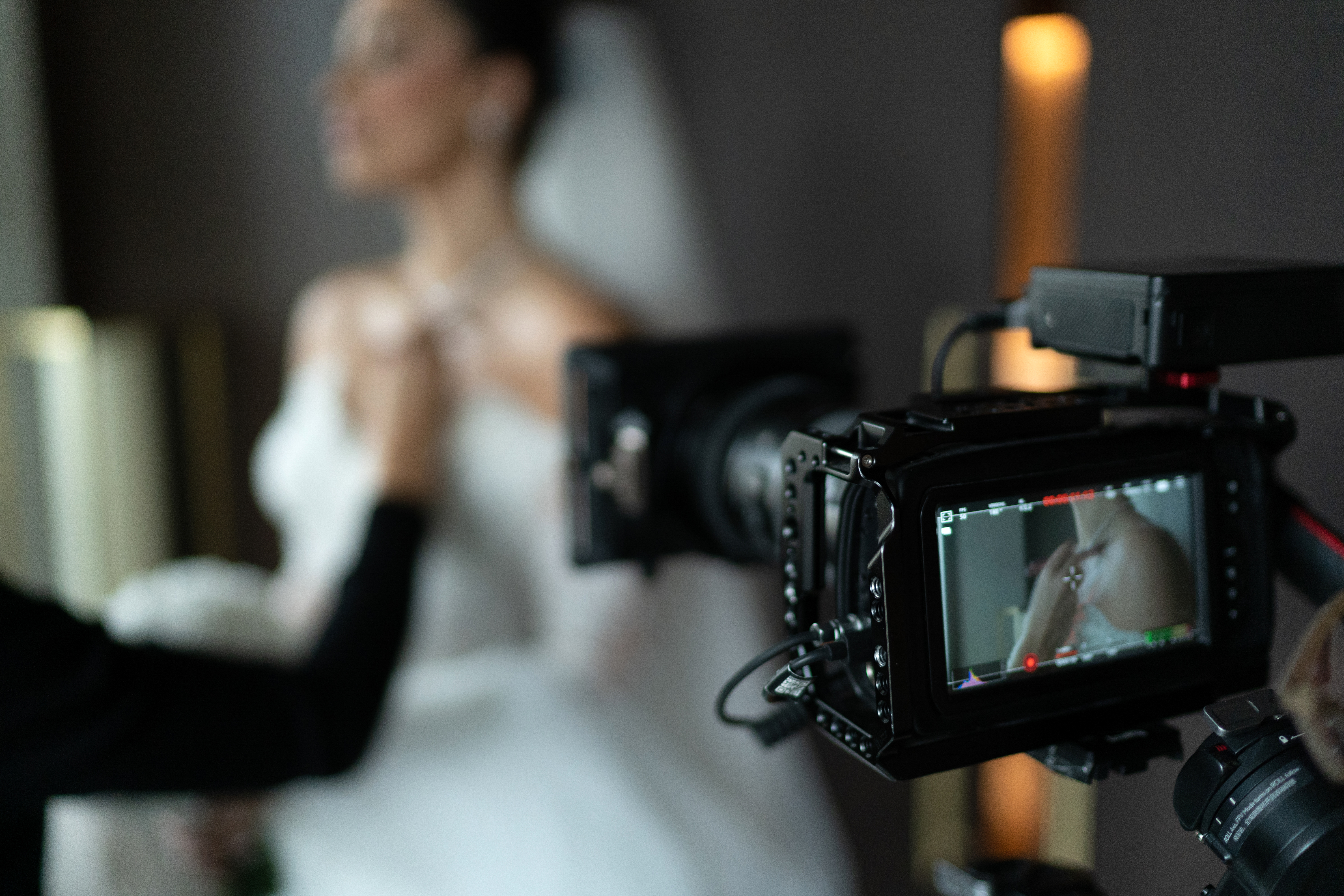
Decide what you want to remember
Photographs give you individual moments to return to and print. Film can preserve movement, voices and the sound of the celebration. Think about which experiences you value: portraits with family, spoken vows, speeches, a lively dance floor or small interactions. That decision is more helpful than assuming every wedding needs the same package.
Ask how the team works together
A combined booking can simplify communication, but ask how the actual team coordinates. Who leads portrait direction? How are ceremony positions planned? What happens when photography and film need the same moment? Clear cooperation matters whether you book one studio or two independent suppliers.
Clarify the film deliverables
A highlight film, full ceremony edit and speeches edit are different deliverables. Ask what is included, approximate film length, how audio is recorded, and whether additional edits are available. Discuss music choices and any licensing limitations with the filmmaker rather than assuming a favourite commercial song can be used.
Allow time for both approaches
A photograph may need only a brief pause, while a film sequence may need time for movement and sound. Share the schedule with both teams and ask them to agree on portrait time. Avoid building a timeline that assumes every task can happen simultaneously, especially when locations are far apart.
Compare the complete proposal
Confirm the number of people, their roles, coverage hours, travel and delivery expectations. Ask who your contact is before and after the wedding. Choose the combination that protects your priorities and fits your budget, rather than adding deliverables you do not expect to watch or use.
Have a date and venue in mind?
Share your date, venue and priorities. We’ll talk about the photography and film coverage that fits your celebration.
Talk about your wedding